
Every kind of house has its own kind of loft
Bungalows have huge lofts, 1930s semis have headroom, trussed roofs need careful boarding. Find yours.
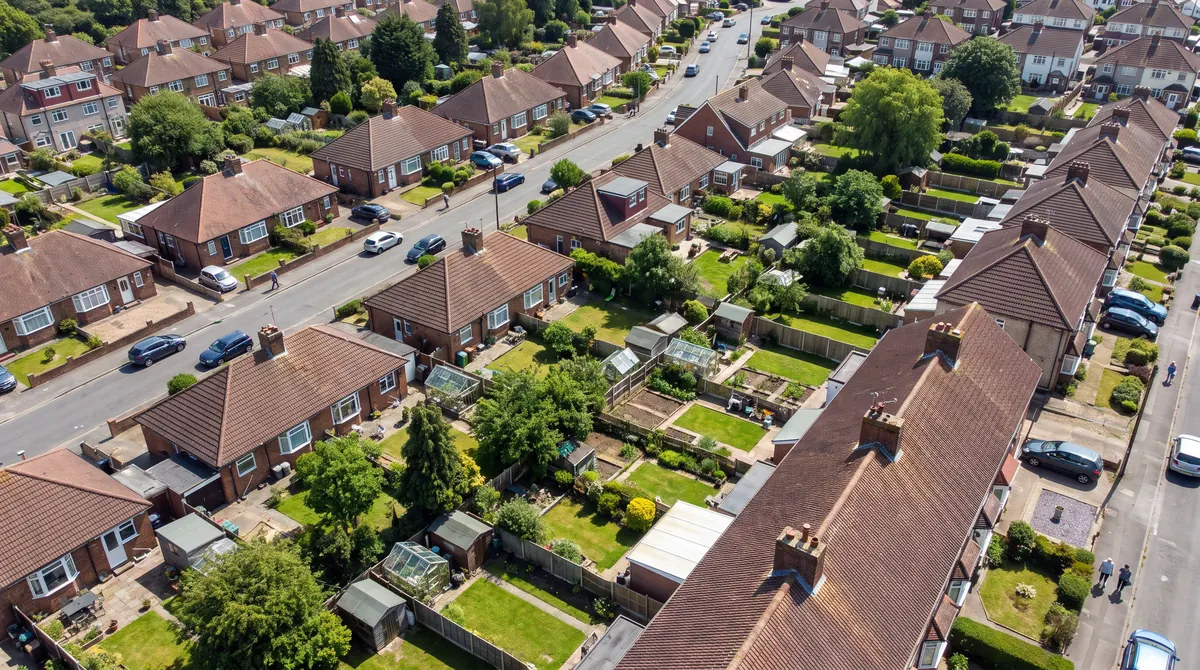
Illustration: homes of different ages on an English street
- Bungalows
- A bungalow’s loft covers every room, so full-depth insulation matters more. Plus lots of room for a raised storage floor.
- 1930s semis
- 1930s semi lofts are tall and roomy, ideal for a raised storage floor over full-depth insulation. What we usually do.
- Victorian and Edwardian terraces
- Older terrace lofts are small and quick to insulate. Keeping the eaves clear matters. What we do and what to expect.
- 1960s to 1980s houses
- Trussed roofs from the 60s to 80s leave less room to move. How we insulate them and board between the trusses.
- Post-war houses
- Post-war homes often have thin, settled insulation. A top-up to full depth and a storage floor are the usual job.
- New-build homes
- New-build lofts are usually insulated but have no storage. How to add boarding without squashing the insulation.
- Period and listed homes
- Old roofs need to breathe. How we insulate period and listed lofts and keep the airflow right.
- Top-floor flats
- The loft above a top-floor flat usually needs the freeholder’s permission. What to check before booking.
Full depth below. Room to store above. Get a price.
Tell us about your loft and we’ll quote the insulation, boarding and ladder in writing. Free, no obligation.